
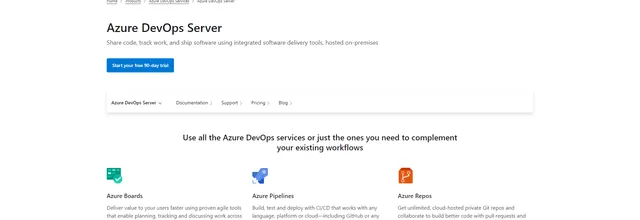

On-premises Microsoft toolset for sharing code, tracking work and shipping software

Open source distributed version control system for software projects of any size
By Git

Git is an open source system for tracking changes to source code, released as free software. Rather than keeping history on one central server, every developer's machine holds a full copy of the repository, so most operations run locally and quickly. Its project describes it as meant to cope with a single-developer project and a huge one alike, with speed and efficiency as primary design goals from the start.
Git was built to work on the Linux kernel, which means it was designed from the beginning to handle repositories holding tens of millions of lines of code. It also stores repositories compactly, which keeps the full history affordable to carry around.
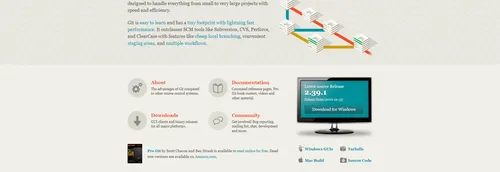
The project says Git is easy to learn and has a small footprint. It contrasts itself with older tools such as Subversion, CVS, Perforce and ClearCase, citing cheap local branching, convenient staging areas and support for multiple workflows.
Git's website collects command reference pages, the Pro Git book content and videos, along with graphical clients and binary releases for the major platforms. The community side covers bug reporting, a mailing list and chat, and the project notes a large ecosystem of hosting services built around it.
Git is an open source distributed version control system. It tracks changes to source code and handles everything from small projects to very large ones, with an emphasis on speed and efficient storage of history. It was originally built to work on the Linux kernel.
Developers and teams of every size use it, and hosting services such as GitLab and GitHub are built around it. Many editors and graphical tools include Git support.
Summary written by TrustList from the business's own published information, Nov 2026.
2 images - click to enlarge
No questions yet. Be the first to ask about Git.
Similar listings buyers compare against this one.
On-premises Microsoft toolset for sharing code, tracking work and shipping software

Configuration management software from IBM for tracking changes and controlling access to enterprise software assets

Digital business card platform for teams, with caller ID and CRM sync

Version control system for art, design and animation teams working with large binary files

SQL Server Management Studio add-in that puts database schemas under version control

Version control and bug tracking system for development teams, built to replace Visual SourceSafe

Code analysis tool that shows code health, technical debt and team knowledge risks
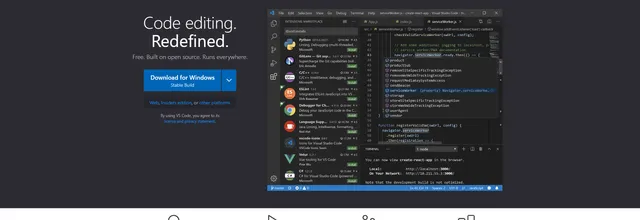
Open source code editor for developers on Linux, macOS and Windows, with built-in AI agent support
Articles that share the Version Control tag or mention this listing.
 Cybersecurity
10 Nov 2026
CVE-2026-111760 lets a malicious repository plant hooks through a submodule during a recursive clone. Fixes are backported to every release…
 United States
5 Oct 2026
Cloudflare says it will begin billing for Artifacts, its Git-compatible versioned storage for AI agents in open beta on the Workers Paid…
 United States
1 Oct 2026
From 7 October 2026, GHE.com (GitHub Enterprise Cloud with data residency) stops accepting HTTPS clients that offer only X25519 for key…
Everything here links back to the same verified catalogue. Pick your next stop.


